
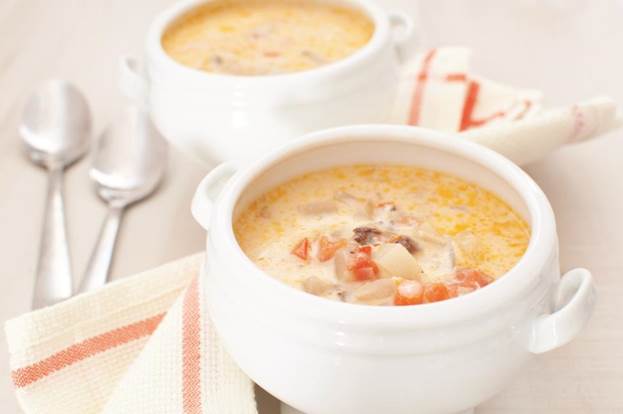
How to Make a Decadent Lobster Stew with White Wine

TRY NEXT: The Best Lobster Sandwich That’s Not a Lobster Roll
Preparing the lobster
Cooking lobster might seem intimidating, but it is surprisingly straightforward. Bring three cups of water to a boil and submerge your lobster for five minutes. You are only partially cooking it at this stage. Remove the lobster and let it cool on a rimmed baking sheet.
You will only use the tail and claw meat immediately. Use a lobster cracker or gently whack the claws with a meat mallet to remove the meat. Twist the tail from the body, then remove the flipper end. Push the tail meat out from the small end of the shell to extract it in one piece. Chop the meat into bite-sized pieces and reserve.
Any leftover meat in the knuckles, legs or body can be stored in a sealed container in the fridge. Make sure to remove it from the shell on the same day. But whatever you do, don’t toss out the knuckle meat. It is truly the best part of the lobster!
The reserved lobster cooking liquid is essential for the stew’s flavor, so combine it with any juices that drip while shelling.
Sourcing the lobster
If you live in New England or nearby, finding a two-pound Maine lobster is easy at local fish markets. Elsewhere, you can order live lobsters online from reputable sellers like Maine Lobster Now, which ships overnight. Buying a whole lobster is essential for this Maine lobster stew recipe because you will use the cooking juices in the stew. Look for sustainably sourced lobsters that arrive lively.
Wine cooking and pairing tips
Oaked Chardonnay is a key ingredient here. Its weight and richness balance the sweetness of the lobster and the aromatic notes of saffron and fennel. If you are splurging, the Donelan Nancie Chardonnay is exceptional, but any pleasant oaked Chardonnay will elevate the stew. Avoid stainless steel–fermented whites, which are lighter and less luxurious on the palate.
Adding the wine to the vegetables and stock allows the flavors to meld, creating a fragrant, velvety base for the lobster. For a fully indulgent experience, serve the same wine alongside the finished soup.
Lobster stew vs bisque vs chowder
This dish is sometimes mistaken for a bisque, but there are important differences:
- Bisque is a French seafood soup thickened with cream and lobster shells that’s puréed to a velvety consistency.
- Chowder is known for a thicker, rustic consistency and frequently includes the powerful flavor of salt pork.
- In addition to heavy cream, this lobster stew uses chicken stock and potatoes for a creamy, approachable texture and relies on the natural lobster juices for depth.
The result is a simpler yet decadent dish that celebrates the lobster rather than masking it.
Serving suggestions
This lobster stew is an ideal dish for wintertime romantic dinners, date nights or small celebratory gatherings. It is a luxurious appetizer that sets the tone for an unforgettable meal.
Pairing the finished stew with the same Chardonnay used in cooking brings the flavors together and adds elegance to the table. This recipe also works beautifully as a starter for holiday dinners or special occasions, honoring lobster’s historical role in New England feasts.
For those who love soups and indulgent flavors, it’s worth checking out all of our best soup recipes.
Decadent Lobster Stew with Chardonnay
Ingredients
- 2 lb Live lobster
- 6 tbsp Unsalted butter
- 2 Medium yellow onions finely chopped
- 3 cloves Garlic coarsely chopped
- 1 cup Celery cut into thin slices, then halved
- 1 cup Carrot cut into rounds, then quartered
- 1 cup Fennel finely chopped
- 3 tbsp Brandy
- 28 oz Canned plum tomatoes with the juice
- 1 cup Donelan Nancie Chardonnay or your favorite oaked Chardonnay
- 2 cups Chicken stock
- 2 Sprigs thyme
- 2 Dried bay leaves
- 1/2 tsp Saffron threads
- 2 Medium round white potatoes peeled and cubed
- 1/2 cup Heavy cream
- Sea salt
- Freshly ground white pepper

Instructions
- Bring 3 cups water to a boil in a pot large enough to hold a two-pound lobster.
- Add lobster and cook until shells are red but meat is not yet cooked through, about 5 minutes.
- Using tongs, transfer the lobster from the pot to a rimmed baking sheet. Save cooking liquid.*
- When cool enough to handle, crack the shells over a bowl, saving as much juice as possible. Extract the tail and claw meat, chop it into 1 or 1/2 inch chunks, and reserve.
- In a second, medium-sized stock pot, melt the butter and add the onion, garlic, celery, carrots, and fennel over medium heat.
- Sauté the vegetables for about 10 minutes or until they are soft.
- Remove pot from heat and add brandy, return to heat and cook until brandy is almost evaporated.
- Add 1 cup of the lobster cooking liquid,* the plum tomatoes and juice and bring the mixture to a simmer.
- Add the Chardonnay, chicken stock, bay leaves, thyme and saffron.
- Bring the mixture to a simmer; cover it and cook for about 40 minutes.
- After the 40 minutes is up, add the potato and cook until the potato is soft. Remove the bay leaves.
- Remove the soup from the stove and let it cool.
- Just before serving, return the soup to the stove and slowly bring it to a gentle simmer, making sure not to boil.
- Stir in the heavy cream, cooked lobster and season to taste with sea salt and ground white pepper.
- Immediately ladle into warm soup bowls.
- Serve hot, paired with a glass of the Chardonnay used to make the stew.
Notes
A note on the provided nutrition information
The nutrition information provided has been estimated by an online nutrition calculator and is not a substitute for a professional nutritionist’s advice.Nutrition

This article was published in 2013 and most recently updated in January 2026 with a new introduction, nutrition information, a clarification in the instructions and an updated graphic.


Amy is considered a leading authority on aphrodisiacs. Her work in aphrodisiacs is quoted in publications including National Geographic, The New York Times, Epicurious, Wine Enthusiast, Health and Playboy magazines. She speaks internationally on aphrodisiac foods and has brought her knowledge of aphrodisiac history and science to national television shows including The Today Show and CBS Early Show. She is a frequent guest on relationship and lifestyle radio and podcast shows and has been interviewed by BBC and NPR radio, Cosmopolitan radio and popular podcasts including My Dad Wrote a Porno.
Amy is also a freelance food, wine and health researcher and writer as well as a wine competition judge. Her work has appeared in publications ranging from Variety to The Daily Meal. She is an MSN content provider. And she is also a former wine editor for Gayot.com and wine & spirits editor of Las Vegas magazine.
Fun fact: Amy was the creator of the first ever comprehensive food and wine apps, Amy Reiley's Pocket Gourmet and Amy Reiley's Pocket Vineyard for Palm.
- 15 Minute Shaved Fennel Citrus Salad - October 19, 2026
- 4 Foods That Decrease Libido and Kill a Romantic Evening - October 17, 2026
- Easy Butternut Farrotto with Parmesan & Thyme (farro risotto) - October 16, 2026




We find ourselves puzzled by your comment. If you look at the history of chowder, it is a kind of soup typically made with milk or tomatoes at the base and often incorporates salt pork. And while this recipe does call for tomatoes, it could not be called a tomato-based soup. But really we’re most puzzled as to why you aren’t talking about flavor! Because no matter what you call this dish, it definitely delivers on taste.
Lobster chowder?….Maybe. Lobster stew? Not even close.