
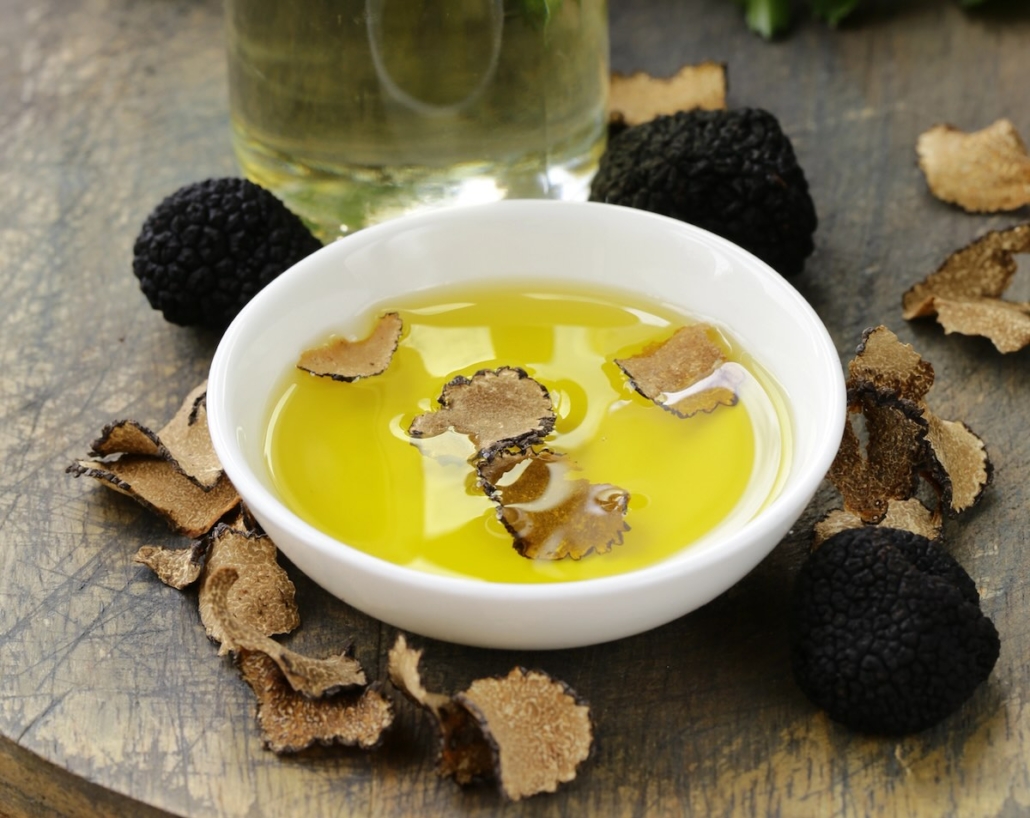
How to Choose the Best Truffle Oil (And Why Most Fall Short)

Truffles are among the most exciting, extravagant, seasonal ingredients a chef or home cook can find. But because of the ingredient’s seasonality, short lifespan and high cost, most of us don’t ever get to cook with truffles.
I’m one of the lucky ones. I’ve not only cooked with truffles but I’ve also hunted for truffles and even helped host a truffle festival. To say that I know about truffles is an understatement. And I can tell you that although cooking with truffles can be exciting, cooking with a great truffle oil is almost as good and less than half the price.
That’s why I’m going to show you how to choose a truffle oil that’s actually worth using.
Famed as an aphrodisiac, truffles offer a scent that replicates that of a male pheromone. (Of course, this assumes that the woman enjoying the truffle scent is attracted to men. Just pointing it out.)
I like to think that because of their sexy aroma, subtle yet complex flavor and especially because of their rarity, truffles are aphrodisiac for everyone. And while we may not all get to go out and hunt our own truffles, we can all order a bottle of truffle oil.
But you need to know what to look for.
Why most truffle oils fall short
There are two kinds of truffle oil. The first is made by blending real truffle with cooking oil, typically olive oil, but not always.
The second is made with chemicals designed to replicate the aroma and flavor of truffle blended with cooking oil. These oils sometimes contain small amounts of truffle for marketing purposes but their dominant flavors and aromas are produced in a lab.
These oils usually feature the chemical 2,4-dithiapentane, which was created to mimic one of the hundreds of compounds in truffles that make them so profoundly flavorful. This means that not only is the oil lacking in authentic truffle flavor, it only offers one note of the truffle’s diverse flavor profile.
The kind of truffle oil you want to try is the first kind!
How do you know what’s in your truffle oil? Check the ingredients before you buy. Or if you’re curious, buy one of each kind so you can taste what I’m talking about. It will be apparent before you even taste that the overpowering aromas of synthetic truffle oil are like nothing found in nature.
If the ingredient list on the bottle has anything other than the cooking oil and truffle in the ingredients, you know it’s not quality truffle oil. Don’t be fooled by ingredients like “truffle essence.”
Now there’s a second problem in identifying a good truffle oil. And this one isn’t as easy to spot.
Most truffle oils aimed at the home cooking market are made with the cheapest truffles. Now, even the most inexpensive truffles aren’t that inexpensive and what you’re getting is still made from a quality product.
But an oil made from black summer truffles, which are both less expensive and a great deal less flavorful than the phenomenal Périgord truffles will have a subtle and sometimes even bland flavor. I’ve even had a white truffle oil made from spring truffles that was about as flavorful as cardboard. It wasn’t that it was made with bad truffles. It’s just that the subtle flavor of the less prized truffles can’t carry over into an oil.
How to choose a truffle oil that’s actually worth using
Truly natural truffle oil is a relatively uncommon product. Most oils on the market rely on synthetic aroma compounds rather than real truffles, even when they’re marketed as premium.
After working with truffles for years, I’ve found that when a completely natural oil is available, it’s worth seeking out. But a reputable producer of authentic truffle oil isn’t always easy to find.
So rather than relying on a specific brand, focus on a few key signals of quality:
- Real truffle listed in the ingredients
- No “truffle aroma” or added flavor compounds
- A short, simple ingredient list
- A price that reflects the cost of real truffles
If you can’t find an oil that meets these standards, you may be better off skipping it altogether and using fresh truffle when available or choosing a high-quality finishing oil with its own character.
Availability of small-batch truffle oils fluctuates, so these guidelines will help you choose well no matter what’s on the market.
Uses and serving suggestions
Good truffle oil should be used as a finishing oil, not for cooking. In other words, use it as a drizzle over a completed dish, not for sautéing.
Chef Jack Czarnecki, who created one of the first natural truffle oil brands in America, Oregon Truffle Oil, recommends a variety of uses for his oil, including blending with butter to make a truffle-scented spread. (That’s one of my favorite uses because blending helps make the oil last.)
In cooking
The chef also recommends using this aphrodisiac oil to finish risottos or enhance any cream sauce. It’s also great with pasta. In addition, the aromatic oil adds a distinct, earthy note when drizzled over carpaccio.
Other serving ideas include adding it to your next cheese plate or grazing board. Try drizzling the oil over triple cream cheese. (Did you know that cheese is an aphrodisiac?)
For date night
You can even make aphrodisiac truffle oil a part of a date night movie night at home.
 Just stream your favorite rom-com and pop up some popcorn. Toss the hot popcorn with a touch of this sexy oil instead of butter. Add a pinch of salt and prepare yourself for an aphrodisiac experience. Of course, if you really love truffles, you can just drizzle it over your lover’s curves and start licking.
Where to buy
Because truly natural truffle oil is generally produced in small batches, availability can vary.
If you’re shopping online or in specialty stores, use the guidelines above to evaluate what’s in front of you rather than relying on branding alone. Ingredient lists will tell you far more than marketing claims.
If you enjoyed this story, be sure to read my article on the surprisingly sexy reason pigs are used to hunt truffles.
This article was written in 2014 and most recently updated in 2026 to reflect the latest research and small-batch truffle oil availability and buying tips.


Amy is considered a leading authority on aphrodisiacs. Her work in aphrodisiacs is quoted in publications including National Geographic, The New York Times, Epicurious, Wine Enthusiast, Health and Playboy magazines. She speaks internationally on aphrodisiac foods and has brought her knowledge of aphrodisiac history and science to national television shows including The Today Show and CBS Early Show. She is a frequent guest on relationship and lifestyle radio and podcast shows and has been interviewed by BBC and NPR radio, Cosmopolitan radio and popular podcasts including My Dad Wrote a Porno.
Amy is also a freelance food, wine and health researcher and writer as well as a wine competition judge. Her work has appeared in publications ranging from Variety to The Daily Meal. She is an MSN content provider. And she is also a former wine editor for Gayot.com and wine & spirits editor of Las Vegas magazine.
Fun fact: Amy was the creator of the first ever comprehensive food and wine apps, Amy Reiley's Pocket Gourmet and Amy Reiley's Pocket Vineyard for Palm.
- Champagne Might Get You Drunk Faster - October 23, 2026
- 15 Minute Shaved Fennel Citrus Salad - October 19, 2026
- 4 Foods That Decrease Libido and Kill a Romantic Evening - October 17, 2026




Leave a Reply
Want to join the discussion?Feel free to contribute!