
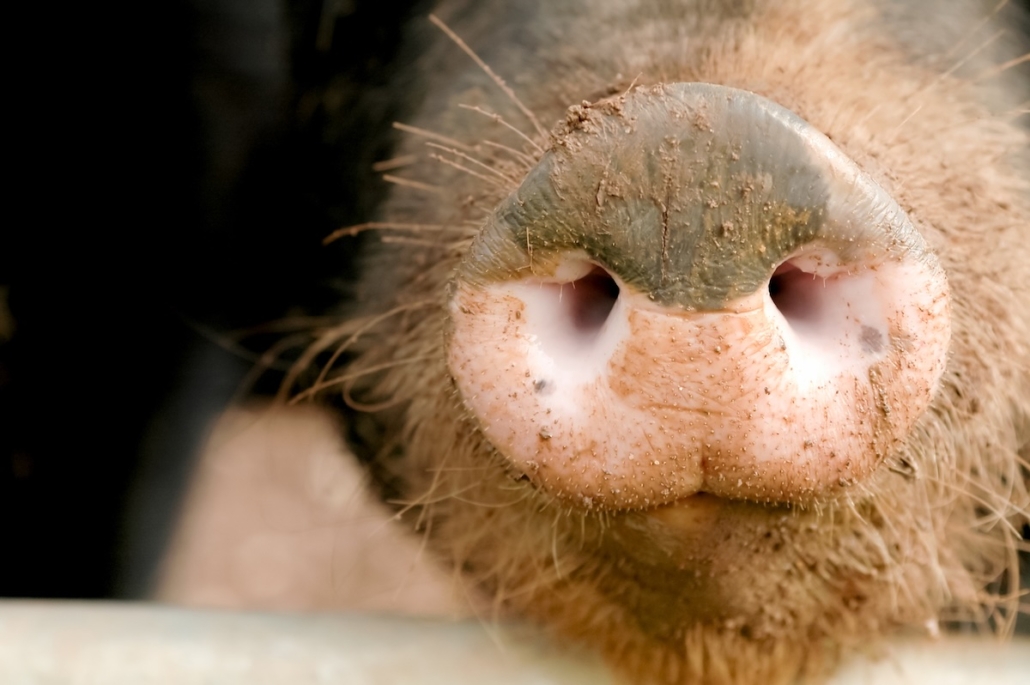
What Is a Truffle Pig? The Curious Link Between Pigs and Sex

What do truffles have to do with sex? Quite a bit, if you happen to be a pig.
These rare fungi are among the world’s most prized aphrodisiac ingredients, and their aroma contains some surprisingly suggestive chemistry. That chemistry may help explain why pigs, with their extraordinary sense of smell, have been used to sniff out truffles hiding underground.
But the story gets even stranger. Some compounds found in truffles are related to the same steroid compounds involved in sexual signaling in pigs. So when a truffle pig gets intensely interested in a truffle, there may be more going on than a very good nose.
And while dogs are now commonly used for truffle hunting, pigs are still used in some truffle-hunting regions.
Why are pigs attracted to truffles?
The connection between pigs and truffles has long been linked to the chemistry of their aromas. Truffles produce a complex mixture of volatile compounds, including compounds associated with animal attraction and communication.
One compound that helped create the famous truffle-pig story is 5α-androstenol, a steroid with a musky odor that has been detected in truffles and is also associated with the scent of male pigs. Related 16-androstene steroids, including androstenone, are involved in sexual signaling in pigs.
But the old explanation that androstenol is what makes pigs find truffles is too simple. Research suggests that pigs and dogs are attracted to dimethyl sulfide, another volatile compound found in truffles, and that it may be an important odor cue for locating mature truffles.
The sexual-chemistry story is therefore real, but it isn’t the whole explanation. Truffle aroma is a complex mixture of volatile compounds, and researchers still don’t have a complete picture of exactly why these aromas attract different animals.
That uncertainty makes the relationship between pigs and truffles even more fascinating. A prized aphrodisiac ingredient happens to contain compounds connected to the reproductive chemistry of one of the animals traditionally used to find it.
How do truffle pigs find truffles?
Truffle hunters don’t simply turn a pig loose in the woods and hope it finds a truffle. These fungi grow in specific environments and form symbiotic relationships with the roots of particular trees. Truffle formation depends on a combination of ecological and environmental conditions.
Once hunters have identified promising truffle habitat, the pig’s extraordinary sense of smell takes over. It searches the soil for the distinctive aroma of mature truffles growing underground. Hunters may also look for clues such as truffle flies, which are attracted to areas where truffles grow.
When the pig detects a truffle, it signals its handler, who carefully digs into the soil to retrieve it. The handler has to move quickly because pigs may eat the truffles they find.
How are truffle pigs trained?
A truffle pig’s training takes time and patience. It’s been compared with the training of service dogs. The process begins by teaching the pig to recognize the scent of truffles and associate finding that scent with a reward.
Pigs are trained to search for the truffle scent and work with a handler. They must also learn to indicate the location of a truffle without eating it or damaging the surrounding truffle bed.
Why are dogs used more often than pigs?
Pigs have an extraordinary sense of smell and a natural instinct for rooting through soil, but there is one, or really two, obvious problems: they like to eat what they find and they’re extremely large. A typical pig weighs over 300 pounds. Would you want to get between that and its food?
Dogs are generally easier to manage in the field and are now preferred in many truffle-hunting regions because they can locate truffles without the same appetite for them. Pigs are still used in some places, including parts of France.
How many truffles can a pig find in a day?
There is no reliable set number of truffles a pig can find in a day. The amount depends on the availability of mature truffles, habitat, weather, season and the experience of the animal and handler…and maybe just a bit of luck.
Why are truffles considered an aphrodisiac?
Truffles have a long history of being associated with sexual desire. Their intense aroma, rarity and reputation as a luxury food have all contributed to their aphrodisiac status. The chemistry of truffles adds another intriguing layer to that story.
One of the compounds associated with truffle aroma is androstenol, while the related compound androstenone is associated with sexual signaling in pigs. Humans can detect androstenone too, although sensitivity varies considerably. Research has found that some women perceive the odor differently depending on individual and situational factors, and studies have explored possible effects on mood, physiological responses and perceptions of attractiveness. The evidence does not establish androstenone as a human pheromone, however.
That distinction matters. Saying that truffles contain a compound associated with sexual signaling is scientifically supportable. Saying that eating truffles will make a woman feel sexually attracted is not.
Still, it makes the truffle’s reputation as an aphrodisiac unusually compelling. There is a genuine connection between the aroma chemistry of truffles, sexual signaling in pigs and the way some people perceive related compounds. Add centuries of aphrodisiac lore and one of the world’s most seductive ingredients has a pretty remarkable story.
Where do truffles grow and what do they taste like?
Truffles grow underground in association with the roots of certain trees, particularly oaks. Their formation depends on complex relationships between the fungus, its host plant and the surrounding soil environment.
The best-known culinary truffles include black Périgord truffles and white truffles from Italy. Other truffle species grow in Europe, North America and elsewhere, and their aromas can differ considerably.
Black and white truffles are prized primarily for their intense aromas. Their volatile compounds create the earthy, musky and sulfurous characteristics associated with truffle flavor.
Where can you buy truffles?
Fresh truffles are highly seasonal, so availability depends on the type of truffle and time of year. Specialty food retailers and online purveyors are often the easiest way to find them outside major truffle-growing regions. Retailers such as D’Artagnan and Urbani offer fresh truffles and other truffle products such as truffle-infused cooking oils when available.
For most of us, buying a truffle is considerably easier than following a pig through the woods to find one. But knowing that the hunt may begin with a pig following an aroma tied to some very unusual chemistry makes the ingredient even more fascinating.

This article was written in 2021 and rewritten in 2026 with updated research, a new introduction and table of contents.
Truffle pig photo by Annie Spratt.


Amy is considered a leading authority on aphrodisiacs. Her work in aphrodisiacs is quoted in publications including National Geographic, The New York Times, Epicurious, Wine Enthusiast, Health and Playboy magazines. She speaks internationally on aphrodisiac foods and has brought her knowledge of aphrodisiac history and science to national television shows including The Today Show and CBS Early Show. She is a frequent guest on relationship and lifestyle radio and podcast shows and has been interviewed by BBC and NPR radio, Cosmopolitan radio and popular podcasts including My Dad Wrote a Porno.
Amy is also a freelance food, wine and health researcher and writer as well as a wine competition judge. Her work has appeared in publications ranging from Variety to The Daily Meal. She is an MSN content provider. And she is also a former wine editor for Gayot.com and wine & spirits editor of Las Vegas magazine.
Fun fact: Amy was the creator of the first ever comprehensive food and wine apps, Amy Reiley's Pocket Gourmet and Amy Reiley's Pocket Vineyard for Palm.
- This Apple Pie Martini Tastes Like the Best Part of Apple Pie - September 30, 2026
- Are Almonds Good for Men? The Sexual Health Benefits You Should Know - September 29, 2026
- Oven Roasted Pork Loin With Pomegranate Butter and Roasted Vegetables - September 25, 2026




Leave a Reply
Want to join the discussion?Feel free to contribute!