

Easy Butternut Farrotto with Parmesan & Thyme (farro risotto)

Comfort food is supposed to make you feel good. But so many classic comfort dishes leave out the whole grains and vegetables that make a meal more nourishing. I wanted a better balance for my date-night risotto, so I started making it with farro, an ancient wheat grain with a nutty flavor and chewy texture. Seasoned with garlic, thyme and Parmesan and paired with roasted butternut squash, it makes a cozy fall dinner that feels indulgent while bringing more to the table nutritionally.
What is farro and why cook with it?
Farro is one of the oldest cultivated grains, with a history stretching back thousands of years. This ancient wheat was an important food in the Mediterranean world and remains closely associated with Italian cooking, particularly in central Italy.
Farro has a nutty flavor and a pleasantly chewy texture that make it a natural choice for hearty soups, grain salads and dishes prepared risotto-style. It also provides fiber, protein and minerals, making it a nutritious addition to your cooking.
How farro differs from Arborio rice
Traditional risotto is usually made with a starchy short- or medium-grain rice, such as Arborio, Carnaroli or Vialone Nano. As the rice cooks, it releases starch that gives risotto its signature creamy consistency.
Farro behaves differently. Its grains retain a firmer, more distinct bite, and the finished dish is generally less creamy than a rice-based risotto. Toasting the farro before adding liquid deepens its nutty flavor and helps the grains maintain their texture.
The goal isn’t to make farro imitate Arborio rice. It’s to use a familiar cooking technique to bring out what makes this ancient grain appealing in its own right.
Understanding the different types of farro
The farro you buy matters because processing affects both cooking time and texture.
- Whole farro: The grain retains its bran and takes the longest to cook. It may need soaking before cooking.
- Semi-pearled farro: Some of the bran has been removed, reducing cooking time while retaining more of the grain’s outer layers.
- Pearled farro: Most or all of the bran has been removed. It cooks more quickly and is a convenient choice for this recipe.
For this butternut farrotto, use pearled farro and follow the package directions if its recommended cooking time differs from the one given here.
How to make farro risotto
The method will be familiar to anyone who has made risotto. First, toast the farro. Then build flavor with aromatics and white wine before adding warm stock gradually, allowing the grains to absorb the liquid as they cook. It takes a little patience because the steps cannot be rushed or you won’t achieve the soft, somewhat creamy texture you’re looking for.
Farro doesn’t release starch in the same way as risotto rice, so frequent stirring won’t create quite the same almost rice pudding-like consistency. Instead, you’ll get a dish with distinct, tender grains and a rich combination of flavors.
Roasting the butternut squash adds another layer of flavor to the dish while helping to emphasize the creamy texture. The dry heat concentrates the squash’s natural sweetness and gives the pieces a little color.
Ingredients That Make a Difference
With a recipe built around a handful of ingredients, quality matters. Fresh thyme contributes an herbal note that complements the squash, while garlic and shallot provide a savory foundation. Use freshly grated Parmesan for better flavor and a smoother finish than pre-grated cheese.
Unsalted butter gives you control over the seasoning, especially once the stock and Parmesan have been added. Taste as you cook and adjust the salt at the end.
Choosing the Cooking Wine
Use a dry white wine that you would be happy to drink with dinner. It adds acidity and complexity, balancing the squash and the richness of the butter and cheese. You don’t need an expensive bottle, but avoid wine you wouldn’t want in your glass.
If you’re serving wine with dinner, using the same bottle in the recipe makes the meal feel naturally coordinated.
Why this farro recipe works for a vegetarian date night
This farro risotto is creamy and soul-satisfying, with the nutty chew of farro, the mellow sweetness of roasted butternut squash and the irresistible cheesiness of Parmesan. Garlic and thyme bring fragrance and warmth to the mix, making this the kind of comforting, full-flavored dinner that feels special enough for a date night.
And unlike many classic comfort foods, it brings whole grains and vegetables to the table, too. Farro also offers nutritional benefits like zinc, iron and magnesium, minerals that play roles in sexual health. Pearled farro contains less of some nutrients than less processed forms, but it still contributes meaningfully to a balanced diet.
Farro isn’t the only ingredient with a place in aphrodisiac food lore. Garlic and thyme have long histories in food traditions, as, you might be surprised to learn, does cheese.
Kale might not sound like a romantic ingredient, but it’s a nutritional asset in this recipe. It contributes vitamins and minerals, and it’s one of the foods I explore in my list of the best foods for women’s sexual health. It’s a reminder that a romantic dinner can be both pleasurable and nourishing.
This farrotto is equally at home as a plant-based main course, a fall side dish or part of a vegetarian Thanksgiving menu. But for a cozy date night at home, it’s a comforting, seasonal alternative to the usual dinner routine.
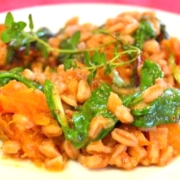
Butternut Farrotto with Kale and Parmesan
Ingredients
- 1 1/2 cups pearled farro*
- 12 oz butternut cut into 1/2 inch pieces
- 2 tsp olive oil
- 2 tbsp unsalted butter
- 1 clove garlic finely chopped
- 1 large shallot finely chopped
- 1 tbsp fresh thyme leaves
- 1 cup dry white wine
- 4 cups vegetable stock
- 3 tbsp Parmesan grated
- 2 cups baby kale
- salt to taste
- sprigs of thyme for garnish optional

Instructions
- Preheat oven to 425 degrees.
- Toast the farro in the oven for 8-10 minutes until it begins to turn golden and smell toasted.
- Toss the butternut with oil and roast in the 425 degree oven for 30-35 minutes.
- Melt the butter in a large saucepan over medium heat. Add the garlic, shallot and thyme and cook for 3-4 minutes, until shallot is translucent.
- Add the white wine and turn heat to medium high. Cook the wine down by half, scraping any shallot and garlic bits down from the sides of the pan.
- Add in the toasted farro and 1/2 cup of the vegetable stock. Cook, stirring, until the vegetable stock is absorbed. Repeat, adding the stock 1/2 cup at a time until there is only 1/2 cup of stock left. This should take about 20 minutes, give or take 4-5.
- Add the last 1/2 cup of stock along with the roasted butternut, stirring until all the liquid is absorbed.
- Stir in the Parmesan and kale before serving, then season with salt to taste. You can garnish with fresh thyme sprigs if desired.
Notes
A note on the provided nutrition information
The nutrition information provided has been estimated by an online nutrition calculator and is not a substitute for a professional nutritionist’s advice.Nutrition
This article was published in 2022 and most recently updated in 2026 with a new introduction and a slight recipe clarification.


Amy is considered a leading authority on aphrodisiacs. Her work in aphrodisiacs is quoted in publications including National Geographic, The New York Times, Epicurious, Wine Enthusiast, Health and Playboy magazines. She speaks internationally on aphrodisiac foods and has brought her knowledge of aphrodisiac history and science to national television shows including The Today Show and CBS Early Show. She is a frequent guest on relationship and lifestyle radio and podcast shows and has been interviewed by BBC and NPR radio, Cosmopolitan radio and popular podcasts including My Dad Wrote a Porno.
Amy is also a freelance food, wine and health researcher and writer as well as a wine competition judge. Her work has appeared in publications ranging from Variety to The Daily Meal. She is an MSN content provider. And she is also a former wine editor for Gayot.com and wine & spirits editor of Las Vegas magazine.
Fun fact: Amy was the creator of the first ever comprehensive food and wine apps, Amy Reiley's Pocket Gourmet and Amy Reiley's Pocket Vineyard for Palm.
- Triple Ginger Gingerbread Loaf Recipe with Fresh, Dried and Candied Ginger - October 28, 2026
- Does Champagne Get You Drunk Faster? - October 23, 2026
- 15 Minute Shaved Fennel Citrus Salad - October 19, 2026




Leave a Reply
Want to join the discussion?Feel free to contribute!